

The largest shock the cinema world has experienced in 2025? The return of horror as a leading genre at the British cinemas.
As a category, it has remarkably outperformed earlier periods with a 22% rise compared to last year for the British and Irish cinemas: £83.7 million in 2025, compared with £68,612,395 in 2024.
“In the past year, not a single horror movie hit £10 million in UK or Irish theaters. Now, five have achieved that,” comments a cinema revenue expert.
The major successes of the year – Weapons (£11.4m), Sinners (£16.2m), the latest Conjuring installment (£14.98 million) and 28 Years Later (£15.54m) – have all stayed in the multiplexes and in the public consciousness.
While much of the expert analysis centers on the unique excellence of prominent auteurs, their triumphs point to something evolving between viewers and the category.
“Viewers often remark, ‘This is a must-see regardless of your genre preferences,’” says a content buying lead.
“Such movies experiment with style and format to produce entirely fresh content, connecting with viewers on a new level.”
But outside of creative value, the steady demand of frightening features this year suggests they are giving cinemagoers something that’s much needed: emotional release.
“These days, movies echo the prevalent emotions of rage, anxiety, and polarization,” notes a film commentator.
“Scary movies excel at tapping into viewers' fears, amplifying them, allowing you to set aside daily worries and concentrate on the on-screen terror,” remarks a prominent scholar of horror film history.
Amid a global headlines featuring war, border tensions, far-right movements, and environmental crises, supernatural beings and undead creatures strike a unique chord with viewers.
“It’s been noted that vampire cinema thrives during periods of economic hardship,” comments an performer from a successful fright film.
“The concept reflects how economic systems can drain vitality from individuals.”
From film's inception, societal turmoil has shaped horror.
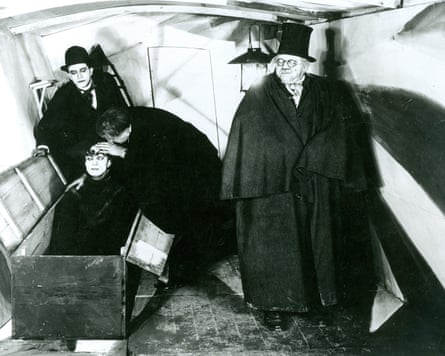
Experts point to the rise of early cinematic styles after the first world war and the chaotic atmosphere of the early Weimar Republic, with films such as The Cabinet of Dr Caligari and the iconic vampire tale.
This was followed by the Great Depression era and iconic horror characters.
“Take Dracula: it depicts an Eastern European figure invading Britain, spreading a metaphorical infection that endangers local protagonists,” notes a academic.
“So it reflects a lot of anxieties around immigration.”
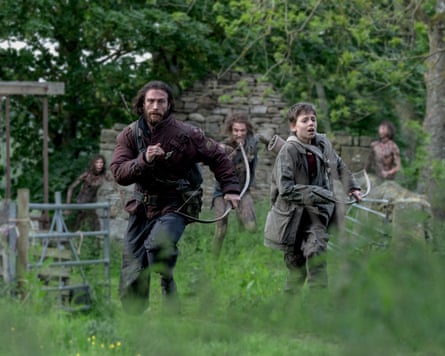
The phantom of immigration inspired the just-premiered rural fright The Severed Sun.
Its writer-director clarifies: “I wanted to explore ideas around the rise of populism. Firstly, slogans like ‘Let’s Make Britain Great Again’, that harken back to some fantasy time when things were ‘better’, but only if you were a rich white man.”
“Also, the concept of familiar individuals revealing surprising prejudices in casual settings.”
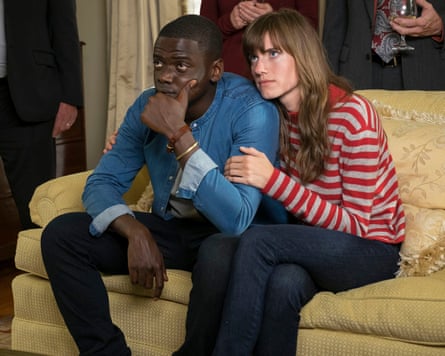
Arguably, the present time of celebrated, politically engaged fright cinema commenced with a brilliant satire debuted a year after a polarizing administration.
It introduced a recent surge of innovative filmmakers, including various prominent figures.
“That period was incredibly stimulating,” says a filmmaker whose film about a murderous foetus was one of the era’s tentpole movies.
“In my view, it marked the start of a phase where filmmakers embraced wildly creative horror with artistic ambitions.”
The same filmmaker, who is writing a new horror original, adds: “In the last ten years, public taste has evolved to welcome bolder horror concepts.”
Simultaneously, there has been a reappraisal of the underrated horror works.
Recently, a independent theater opened in the capital, showing obscure movies such as The Greasy Strangler, a classic adaptation and the late-80s version of Dr Caligari.
The re-appreciation of this “rough and rowdy” genre is, according to the cinema founder, a direct reaction to the algorithmic content pumped out at the box office.
“It counters the polished content from big producers. The industry has become blander and more foreseeable. Numerous blockbusters share the same traits,” he states.
“On the other hand, [these indie works] feel imperfect. They seem to burst forth from deep creativity, free from commercial constraints.”
Horror films continue to challenge the norm.
“These movies uniquely blend vintage vibes with contemporary relevance,” notes an expert.
In addition to the re-emergence of the insane researcher motif – with multiple versions of a well-known story on the horizon – he predicts we will see scary movies in the near future responding to our present fears: about AI’s dominance in the years ahead and “supernatural elements in political spheres”.
Meanwhile, a religious-themed scare film a forthcoming title – which tells the story of Mary and Joseph’s struggles after Jesus’s birth, and includes well-known actors as the holy parents – is planned for launch in the coming months, and will definitely cause a stir through the faith-based groups in the United States.</
